


Page 2 - Perpustakaan Lemhannas RI
P. 2
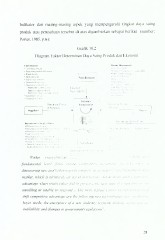
Indikator dari masing-masing aspek yang mempengaruhi tingkat daya saing
produk atau perusahaan tersebut di atas digambarkan sebagai berikut (sumber:
Porter, 1985, p.6):

                                            Grafik 10.2
            Diagram Faktor Determinan Daya Saing Produk dan Ekonomi

Entry Barriers                                      New Entrants                       Rivalry Determinants
• Economies o f scale                                                                  • Industry growth
• Proprietary product differences         Threat of                                    • Fixed (or storage) costs / value added
• Brand identity                          New Entrants                                 • Intermittent overcapacity
• Switching costs                                                                      • Product differences
• Capital requirements                                 Industry                        • Brand identity
• Access to distribution                            Competitors                        • Switching costs
• Absolute cost advantages                                                             • Concentration and balance
                                                                                       • Informational complexity
     Proprietary learning curve                                                        • Diversity of competitors
     Access to necessary inputs                                                        • Corporate stakes
     Proprietary low-cost product design                                               • Exit barriers
• Government policy
• Expected retaliation

           Bargaining Power                                                            Bargaining Power
           of Suppliers                                                                of Buyers

Suppliers                                                                                                        Buyers

                                                           Intensity                   Determinants of Buver Power
                                                          of Rivalry

Determinants of Supplier Power                                     Threat of           Bargaining Leverage       Price Sensitivity'
• Differentiation of inputs                                        Substitutes
• Switching costs of suppliers and firms in the industry                               • Buyer concentration v a • Price'total purchases
• Presence o f substitute inputs                          Substitutes
• Supplier concentration                                                               firm concentration        • Product differences
• Importance o f volume to supplier
• Cost relative to total purchases in the industry                                     • Buv er volume           • Brand identity'
• Impact o f inputs on cost or differentiation
• Threat o f forward integration relative to threat of                                 • Buv er switching costs  • Impact on quality/

  backward integration by firms in the industry                                        relative to firm          performance

                                                                                       switching costs           • Buyer profits

                                                                                       • Buyer information       • Decision maker’s

                                          Determinants of Substitution Threat          • Ability to backward     incentives
                                          • Relative price performance of substitutes
                                          • Switching costs                            integrate
                                          • Buyer propensity to substitute
                                                                                       • Substitute products

Porter     menyebutkan                                                                 • Pull-through            “At the most

fundamental level, firm s create competitive advantage by perceiving or

discovering new and better ways to compete in an industry and bringing them to

market, which is ultimately an act o f innovation. Innovations shift competitive

advantage when rivals either fa il to perceive the new way o f competing or are

unwilling or unable to respond .. The most typical causes o f innovations that

shift competitive advantage are the following new technologies, new or shifting

buyer needs, the emergence o f a new industry segment, shifting input costs or

availability and changes in government regulations".

                                                                                                                    28

